Every growing contractor faces a pivotal strategic choice: should you purchase modern estimating software and build an internal preconstruction desk, or should you partner with a third-party outsourced estimating service? Neither solution is universally superior. The right decision hinges on your annual bid volume, trade complexity, available in-house expertise, and financial risk tolerance.
1. The Core Preconstruction Dilemma
Purchasing software represents a capital investment in tooling and processes. However, a common misconception among contractors is that software produces estimates autonomously. In reality, software is simply a digital calculation canvas—it still requires hundreds of human hours to perform takeoffs, verify drawing scales, identify scope gaps, and input labor rates.
Conversely, hiring an outsourced construction estimating service treats preconstruction as a variable operational service. Instead of managing software licenses, database updates, and estimator payroll, you pay per bid package and receive completed, audit-ready deliverables.
2. 12-Factor Comparison Matrix
The table below compares the operational realities of internal software ownership versus third-party estimating services across twelve critical business factors.
| Evaluation Factor | In-House Software Model | Outsourced Estimating Service |
|---|---|---|
| Initial Capital Cost | High ($2,000–$15,000 for licenses, hardware, setup) | Zero capital expenditure; project-based fee |
| Ongoing Overhead | Fixed annual recurring subscriptions ($1,200–$6,000/seat) | Variable cost; zero overhead during slow seasons |
| Estimator Labor Cost | High ($75,000–$120,000/yr salary + benefits/taxes) | Included in flat per-project pricing |
| Training & Onboarding | 40–120 hours of training and database setup | Immediate execution; zero onboarding downtime |
| Takeoff Time Required | Diverts internal staff or owner hours from field operations | Offloaded entirely to professional cost engineers |
| Bid Volume Scalability | Bottlenecked by internal staffing bandwidth | Instantly scales up or down with bid market surges |
| Trade Specialization | Limited to the specific expertise of in-house staff | Access to multidisciplinary teams (civil, structural, MEP) |
| Quality Control Liability | Rests 100% on internal staff verification | Double-checked by senior peer review before delivery |
| Data Ownership & History | Complete local control of historical databases | Deliverables delivered in open Excel workbooks |
| Workflow & Bid Control | Instant real-time adjustments during final bid-day hours | Requires advance delivery window (typically 24–48h) |
| Drawing Revisions & Addenda | Handled internally as time permits | Systematically tracked and updated by service desk |
| Best Suited For | Established GCs with steady full-time bidding desks | Growing contractors, trade subs & fluctuating bid loads |
3. Total Cost of Ownership Analysis
When evaluating software, contractors frequently overlook the true total cost of ownership. The software license is typically the smallest line item. A single professional estimating seat involves multiple cost drivers:
The Full In-House Estimating Equation
Maintaining an in-house estimating department requires substantial fixed commitments:
- Senior Estimator Salary: $85,000 to $115,000 annually based on USA regional averages.
- Payroll Taxes, Healthcare & Benefits: Approximately 20% to 28% burden ($17,000–$32,000/year).
- Software Subscriptions & Upgrades: $2,500 to $7,000 annually per seat for takeoff, estimating, and pricing data.
- Hardware & Workstation Upgrades: Multi-monitor high-resolution CAD workstations and server storage.
- Total In-House Cost: Approximately $110,000 to $160,000+ per year in fixed overhead, regardless of how many bids you win or how many jobs you tender.
The Outsourced Variable Cost Model
With an outsourced service partner like Smart Scale Estimators, bidding expenses remain directly proportional to revenue opportunities. If you bid three commercial projects in March and ten in April, your preconstruction expenditure flexes naturally with your pipeline.
For a trade subcontractor bidding 4 to 8 substantial packages per month, outsourced estimating typically costs between $18,000 and $36,000 annually—a fraction of a full-time in-house department.
4. Three Clear Operational Scenarios
Rather than viewing software and outsourcing as mutually exclusive, successful contracting businesses evaluate their operational posture across three practical scenarios.
Explore Our Deliverables
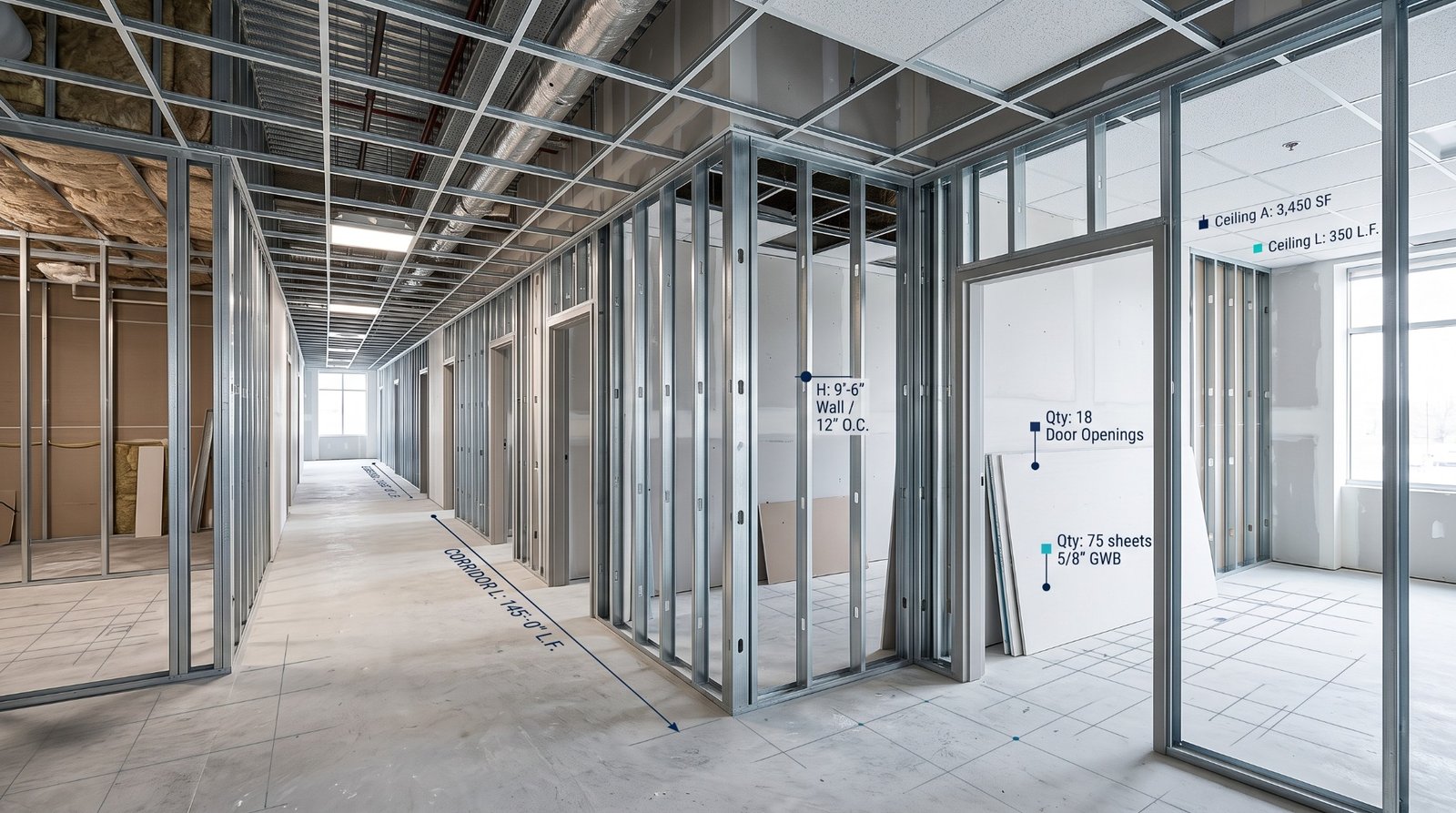
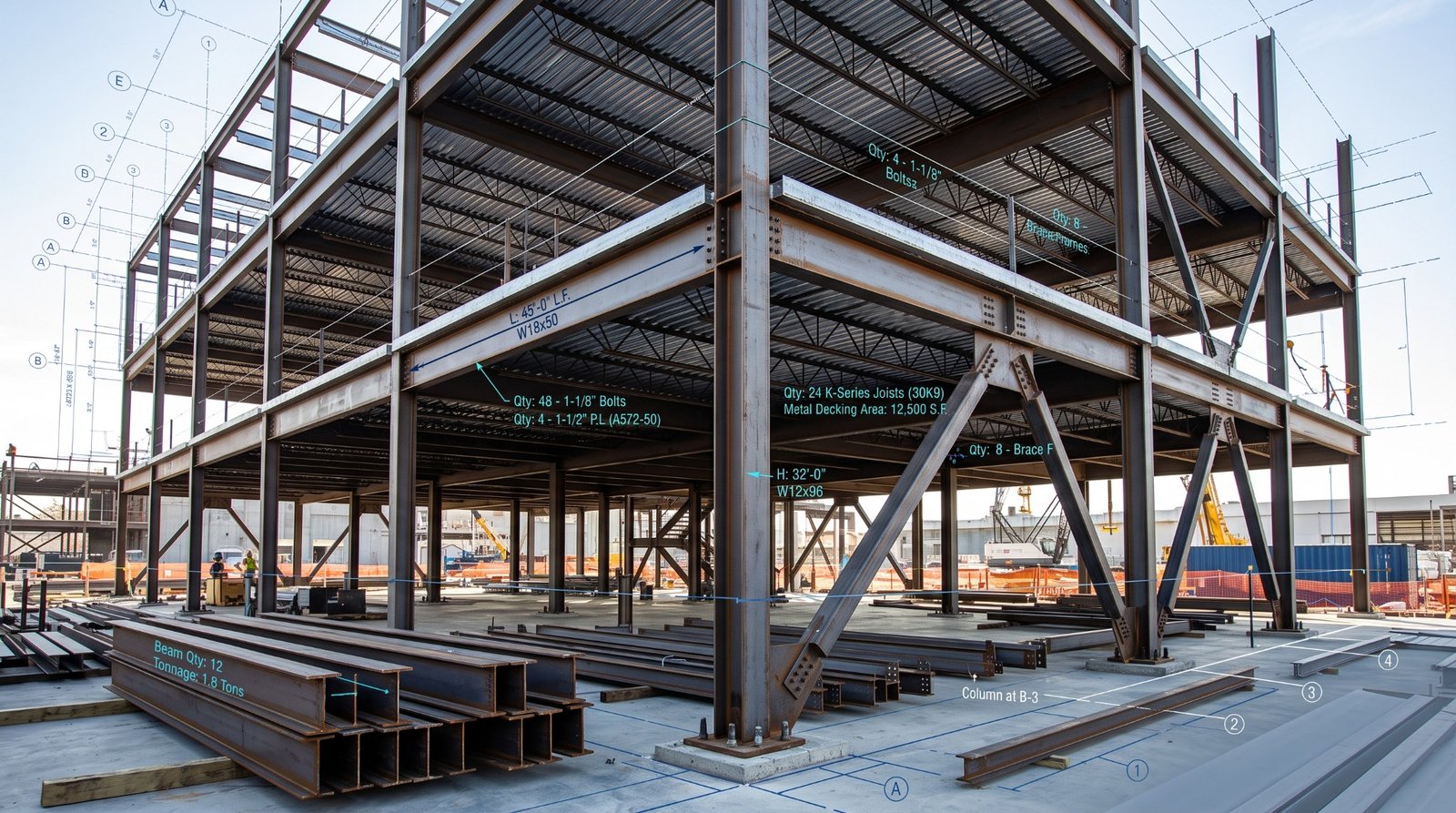
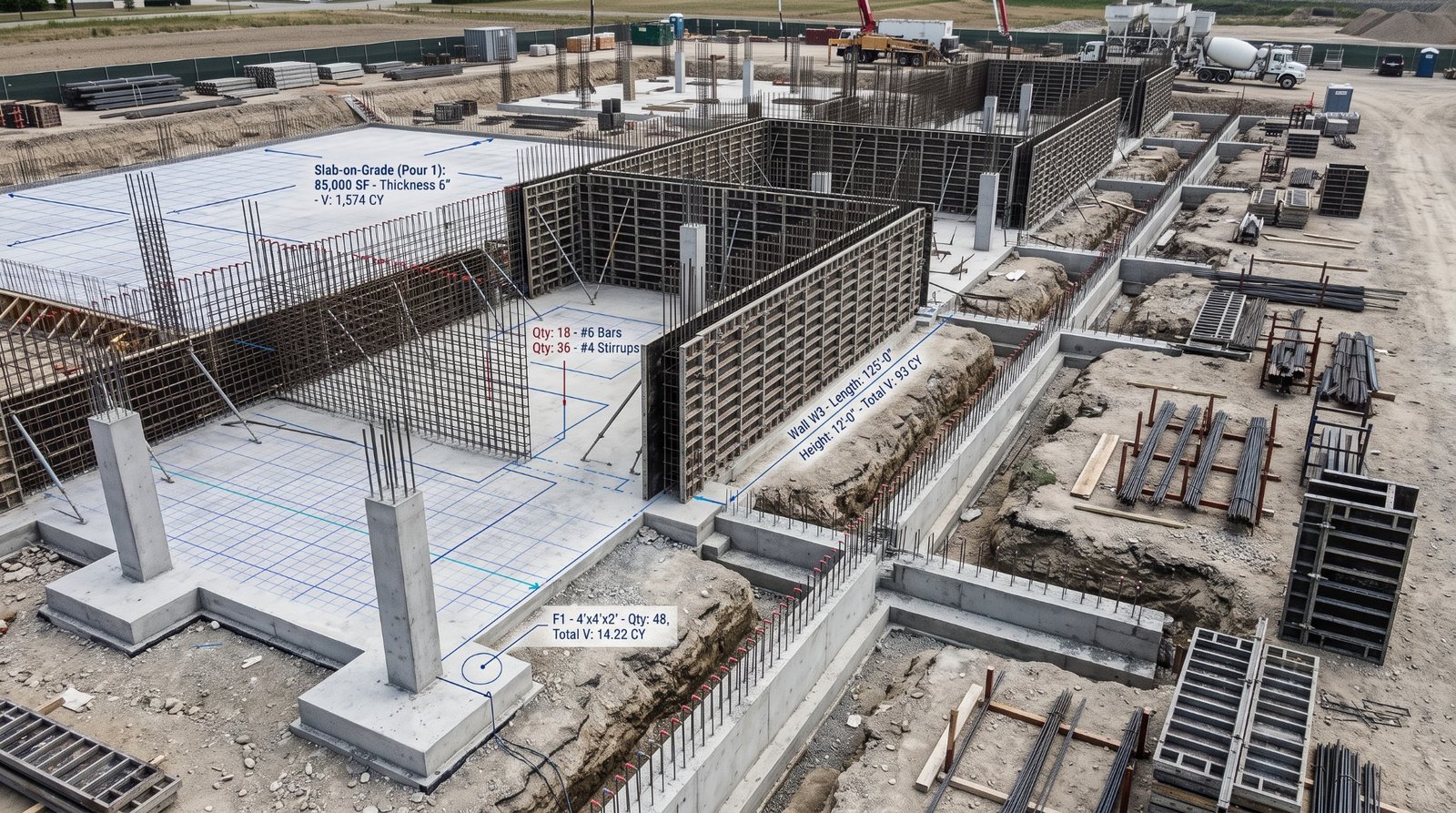
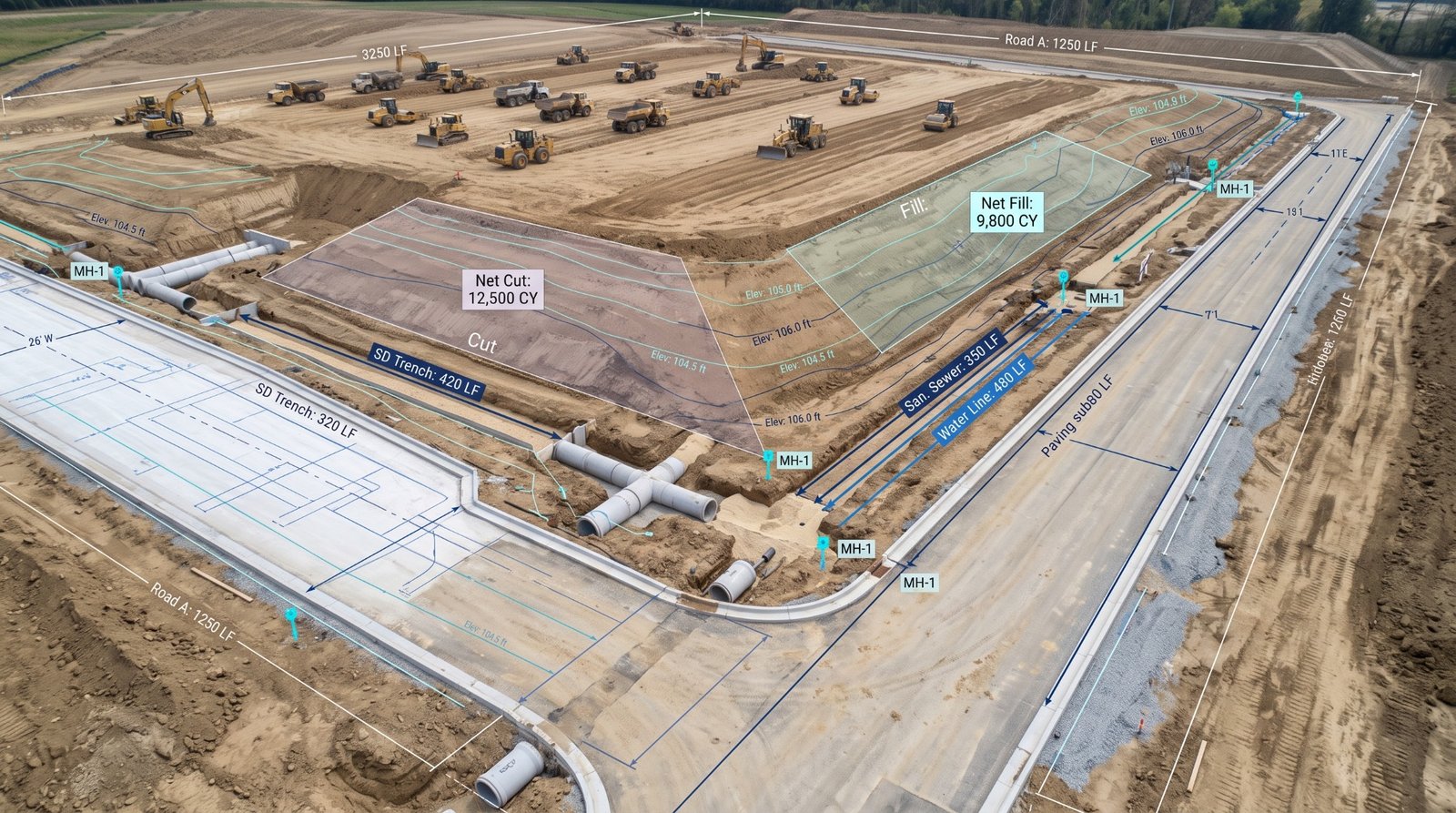
Inspect our itemized Excel workbooks, color-coded vector drawings, and trade breakdowns to see how outsourced estimating integrates with your bidding workflow.
View Estimate SamplesScenario A: When Software Is the Superior Choice
Software ownership excels when your company tenders hundreds of routine, localized bids per year in a single predictable trade, has dedicated preconstruction staff, and requires instant 15-minute adjustments on bid day.
Scenario B: When Outsourcing Delivers Maximum Value
Outsourcing is the optimal choice when the business owner or project managers are currently spending late nights doing takeoffs, when you need to bid on complex multi-trade projects outside your core comfort zone, or when fixed overhead would strain cash flow during seasonal downturns.
Scenario C: The Hybrid Advantage
Many top-performing commercial general contractors utilize a hybrid workflow: they maintain an internal lead estimator who uses software for high-level bid review, while outsourcing labor-intensive quantity takeoffs to an external bureau during bid surges.
Frequently Asked Questions
No. A professional estimating service delivers the quantified bill of materials, labor hours, and base pricing in an unlocked Microsoft Excel workbook. You maintain 100% control over final labor rates, markups, overhead, and profit margins before submitting your bid.
Reputable estimating bureaus use calibrated digital takeoff software and follow CSI MasterFormat divisions with multi-tier quality reviews. When plans and specifications are clear, third-party takeoffs match or exceed the precision of hurried in-house takeoffs.
Yes. Most estimating services operate on a per-project flat-fee basis without long-term contracts, allowing you to use them strictly when internal bandwidth is saturated.
Deliverables are delivered in comprehensive Microsoft Excel spreadsheets with categorized division sheets, labor hours, and formulas intact, accompanied by marked-up vector PDF drawings.