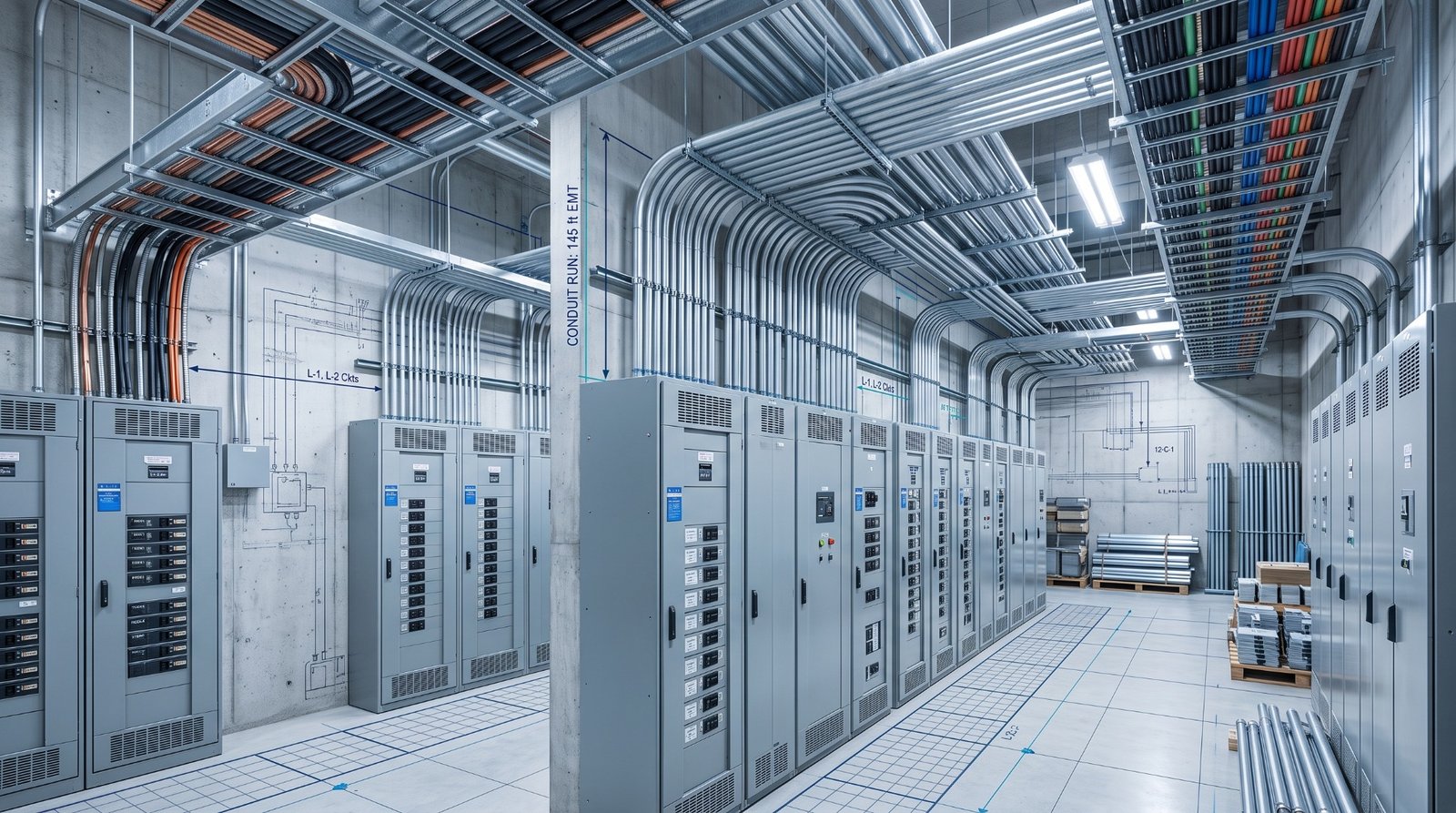
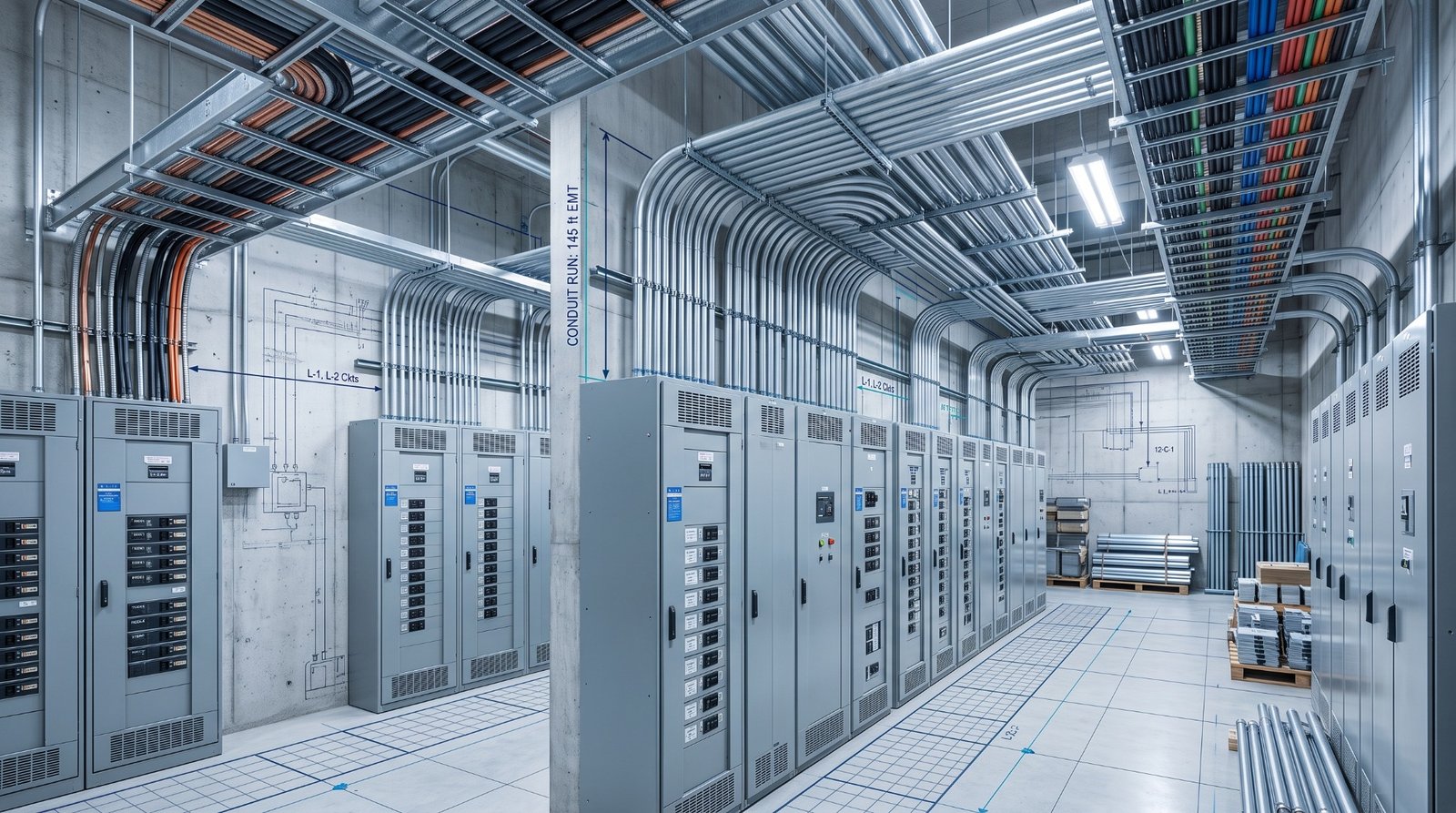
Electrical estimating is among the most calculation-heavy disciplines in commercial construction. Quantifying linear raceways, branch circuits, switchgear, distribution feeders, and lighting fixture counts requires specialized assemblies rather than generic takeoff tools. In 2026, electrical contractors have access to powerful software platforms featuring pre-built labor units, live vendor pricing feeds, and automated count recognition.
1. The Electrical Estimating Ecosystem & Methodology
Electrical contractors often distinguish between three related tools in the preconstruction workflow: digital takeoff software (which measures lengths and counts symbols on PDF drawings), electrical estimating software (which attaches labor hours, conduit assemblies, and material pricing to those items), and bid management portals (which distribute proposals to GCs).
Editorial Comparison Methodology: Our electrical cost engineering team evaluated each platform across four core operational criteria: (1) Division 26 assembly automation (raceway, wire, and fitting multipliers), (2) labor unit integration and adjustment flexibility, (3) supplier catalog connectivity (such as TRA-SER or NetPricer), and (4) usability for commercial vs. residential workflows. Facts were reviewed against current November 2026 product specifications.
Contractor Advisory Note
Smart Scale Estimators is an independent cost engineering and takeoff service company, NOT a software reseller. We leverage advanced takeoff platforms to produce audit-ready Division 26 bid packages for electrical subcontractors who choose to outsource their bidding tasks.
Learn About Electrical Estimating Services2. Electrical Estimating Software Comparison
The table below summarizes the top electrical estimating and takeoff software platforms used across commercial and industrial contracting in 2026.
| Software Platform | Best-Fit Electrical Contractor | Core Assembly Strength | Labor Unit Integration | Deployment Model |
|---|---|---|---|---|
| Trimble Accubid Anywhere | Mid-to-Large Commercial & Industrial Subs | Deep multi-level assemblies & TRA-SER pricing | Built-in Trimble & NECA Labor Units | Cloud (Hosted SaaS) |
| ConEst IntelliBid | Commercial, Low Voltage & Heavy Industrial | Smart substitution & automated feeder schedules | Comprehensive ConEst Labor Rates | Desktop & Cloud Options |
| McCormick Systems | Subcontractors Seeking Fast Visual Takeoffs | Patented multi-level takeoff with auto-fittings | Industry-Standard McCormick Units | Desktop / Windows Server |
| STACK Electrical | Light Commercial & Residential Subcontractors | Fast browser-based takeoff on any device | Customizable user labor rates | 100% Cloud (Browser) |
| Groundplan | Electrical Subs Using Cloud Job Management | Direct integration with simPRO and cloud platforms | User-defined labor & item formulas | Cloud (Browser) |
| Vision InfoSoft (EBM) | Small-to-Mid Commercial & Residential Subs | Straightforward audit trail & EPIC pricing updates | Pre-loaded electrical labor times | Desktop (Windows) |
| PlanSwift for Electrical | Multi-Trade & Subcontractors Familiar with Excel | Highly customizable formulas & visual plugin sets | User-configured labor multipliers | Desktop (Windows) |
| Bluebeam Revu | General & Electrical Subcontractors for Plan Markup | Custom electrical symbol libraries & linear count | Requires external spreadsheet pricing | Desktop / Cloud |
3. In-Depth Platform Evaluations
Selecting the right electrical estimating program depends on the scale of your projects, the complexity of your Division 26/27/28 bids, and your team’s technical bandwidth.
1. Trimble Accubid Anywhere
Trimble Accubid has long been an industry standard for large-scale commercial and industrial electrical contractors. Its cloud-hosted Accubid Anywhere suite enables multi-estimator collaboration on complex bid days, linking directly into Trade Service TRA-SER for commodity copper and gear pricing.
While exceptionally thorough, Accubid requires dedicated onboarding and is designed primarily for established commercial estimating departments.
2. ConEst IntelliBid
ConEst IntelliBid is engineered explicitly for electrical, data cabling, and low-voltage contractors. Its standout feature is Smart Substitution, allowing estimators to rapidly evaluate value engineering options—such as swapping EMT conduit for MC cable across branch circuits with a single command.
Its pre-built database includes extensive electrical items and pre-built assemblies for commercial infrastructure.
3. McCormick Systems
McCormick Systems pioneered multi-level electrical takeoff. When an estimator measures a run of conduit on a drawing, McCormick automatically includes the fittings, hangers, fasteners, wire, and corresponding installation labor.
Its visual interface allows estimators to review work on dual monitors with instant plan-to-estimate cross-referencing.
4. STACK Electrical Takeoff
STACK provides a clean, collaborative browser-based takeoff tool that allows electrical project managers to mark up plan sets from any laptop or tablet without installing local software.
While it lacks the massive legacy item databases of Accubid or ConEst, its ease of use makes it very popular for fast residential and light commercial bids.
5. Groundplan
Groundplan is a modern, cloud-based takeoff software designed specifically for trade contractors. It connects directly with field service software like simPRO, allowing contractors to convert plan takeoffs directly into purchase orders and job schedules.
6. Electrical Bid Manager (EBM) by Vision InfoSoft
EBM by Vision InfoSoft is renowned for its straightforward learning curve and practical bidding workflow. Ideal for residential and commercial service contractors, EBM integrates with EPIC pricing to keep electrical material costs current.
7. PlanSwift Electrical Plugins
PlanSwift is an adaptable takeoff engine. When paired with specialized electrical plugin packs, estimators can click on lighting fixtures and branch circuits to calculate complete material bills of materials.
8. Bluebeam Revu for Electrical Quantification
While not a dedicated electrical estimating database, Bluebeam Revu is indispensable for electrical drawing review. Estimators build custom Tool Chests containing electrical symbols (receptacles, panels, transformers) and calibrated linear conduit measurement tools.
4. The Alternative: Professional Electrical Estimating
Purchasing enterprise electrical estimating software requires recurring software licenses, annual maintenance, continuous pricing database feeds, and extensive database calibration. For many electrical contractors, operating software is not the primary obstacle—finding the uninterrupted time to perform takeoffs is.
When internal capacity is constrained, partnering with a dedicated electrical estimating company provides an efficient alternative. Contractors upload project blueprints and receive itemized Excel spreadsheets, complete feeder schedules, branch circuit breakdowns, and color-coded vector PDF drawing markups in 24 to 48 hours.
Bidding an Upcoming Electrical Job?
Send your drawings to Smart Scale Estimators for a fast quotation. Review our comprehensive sample takeoffs covering switchgear, power distribution, and lighting.
Inspect Electrical Estimate SamplesFrequently Asked Questions
Electrical takeoff software measures physical blueprint dimensions and counts symbols (such as linear feet of conduit or fixture counts). Electrical estimating software takes those raw quantities and calculates material purchase costs, labor installation hours, payroll burdens, overhead, and profit margins.
Most top-tier platforms (such as Trimble Accubid and Vision InfoSoft EBM) integrate with third-party pricing subscription services like Trade Service TRA-SER or NetPricer to update material commodity costs automatically. Other platforms allow manual cost database entry.
Enterprise platforms like Accubid or ConEst typically require extensive formal training and several weeks of database calibration before an estimator can bid independently with full confidence.
Subcontractors often outsource because they lack full-time estimating personnel to operate the software. Outsourcing allows contractors to bid large commercial projects on demand during bid surges without incurring annual software overhead and permanent estimator salaries.